

James Perkins (b. 1978) is an American sculptor who creates a contemporary discourse for the nonsite—a term originated by Robert Smithson in 1968. Perkins collaborates with nature to make a mark, rather than presenting raw earth as an art object. His “post-totem structures”, silk canvases stretched on wooden frames, are buried in the earth for up to two years and are shaped and painted by the bleaching sun, ocean salt spray, sand, soil, and hurricane force winds. His unique practice merges the philosophies of Land Artists like Michael Heizer, Robert Irwin, and James Turrell, with the sensibilities of minimalist painters like Ad Reinhardt, Barnett Newman, and Mark Rothko. The performance elements of his work hearken the bodily action painting of Jackson Pollock or Helen Frankenthaler. His work activates these histories to contemplate how abstraction and land can inspire a society to consider a more harmonic, sustainable and shared vision of the future.
He has exhibited with Metro Pictures, the New York University Institute of Fine Arts, County Gallery, Hannah Traore Gallery, Ace Gallery, Mana Contemporary, Dallas Contemporary, and the School of Visual Arts. Most recently, during a one-week residency for the Scottsdale Museum of Contemporary Art (SMoCA), Perkins installed his sculptures in the Sonoran Desert. Those nonsites will be installed in his solo show at SMoCA.
His work has been featured in Domino, Robb Report, Wallpaper*, Artsy, LUXE Interiors & Design, The Wall Street Journal, and Hodinkee among others. His brand collaborations include Stetson, West Elm, J. Crew, Huckberry, Sleepy Jones, Lulu and Georgia, Faust Wines, UBS, and The Council of Fashion Designers of America (CFDA), and The Four Seasons Naples Beach.
Perkins received a BA from Yale University in Chemistry and a Master’s from the School of Visual Arts in Photography.
He lives and works in New York City and Fire Island, NY.
Exhibit
Works by James Perkins
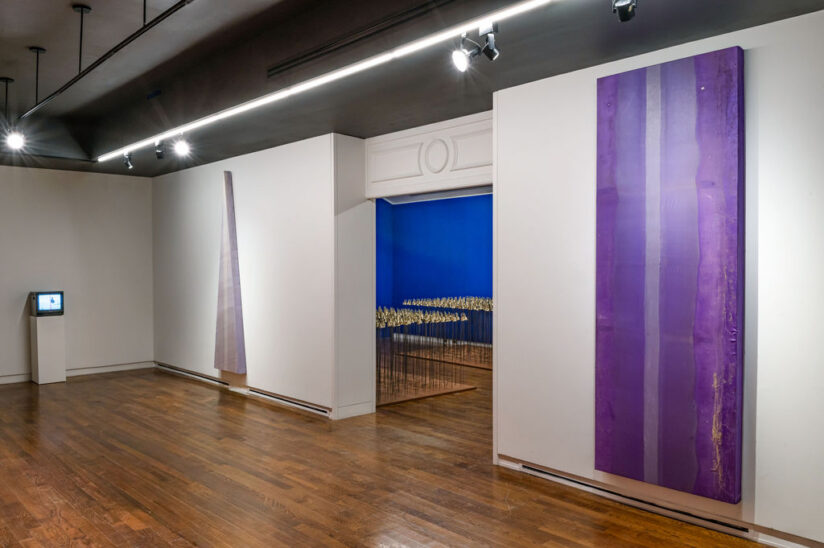
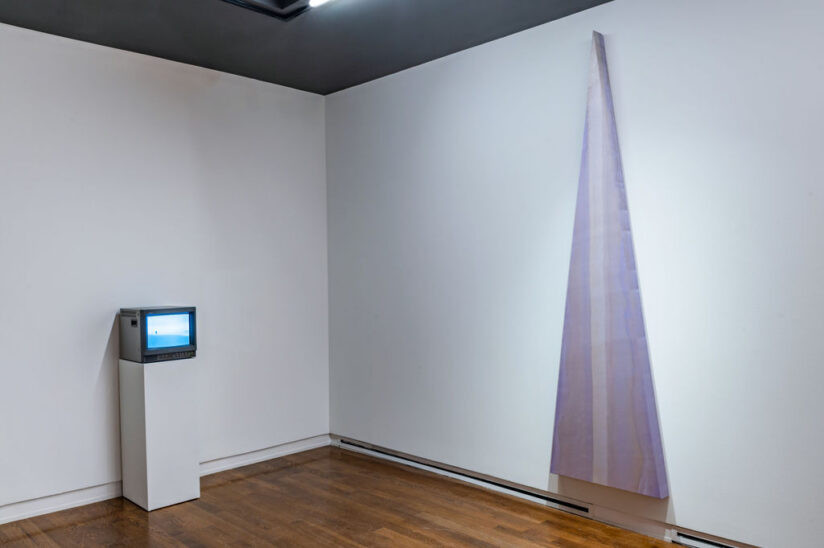
Deeply engaged in land-based practices, James Perkins reframes our understanding of what can be classified as an earthwork. Working in proximity to, and in collaboration with, the ecologies of the shoreline, James buries silk-stretched wooden frames at the ocean, in the bay, in dunes, or on the deck of his home on Fire Island, New […]


September 26 – December 20
Donors & Supporters
Partners
