
 September 26 – December 20

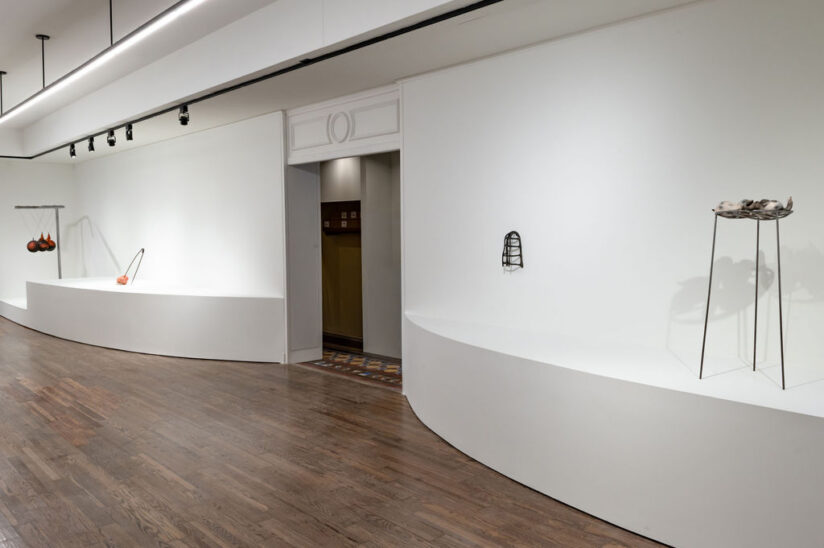
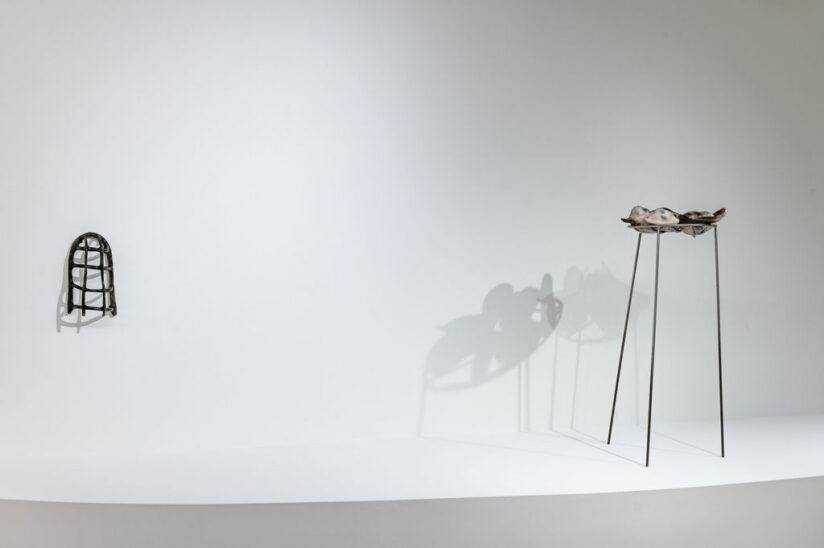
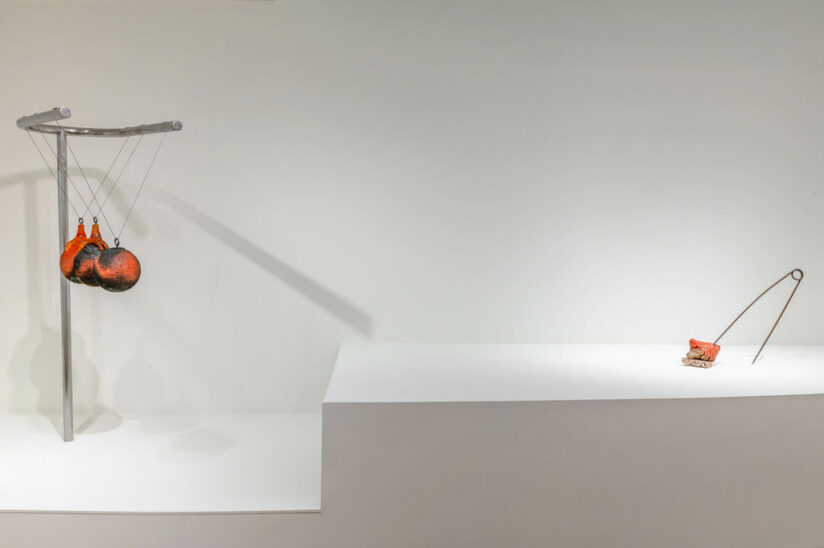
Chiedza Pasipanodya is deeply engaged in transformation, meaning making, the third space, and the fracture, displacement, and trauma of leaving the place you are from. Chiedza operates within Black feminist traditions that encourage ancestral connectivity and future projection, and their sculptures travel in and out of time. Mauuyu (2025), for example, consists of raku-fired sculptures in the shape of fruit from baobab trees, which grow abundantly in Zimbabwe. To create these sculptures, Chiedza wrapped clay with herbs and other items that were then burned into the surface through the intense firing process. These traces of items—including the buchu plant from South Africa’s Fynbos biome and orange rinds from friends at Cranbrook Academy of Art, where Chiedza attended graduate school—become indices of different temporalities and the baobab itself a marker of the ancestral. For the artist, operating from a third space is only possible through this rupture of continuity of place and location.
Co-presented by the Toronto Biennial of Art and the Art Museum at the University of Toronto. Made possible with the generous support of RBC and the Women Leading Initiative. The artist wishes to recognize the support of Partners In Art.
Bio
Bio
Chiedza Pasipanodya
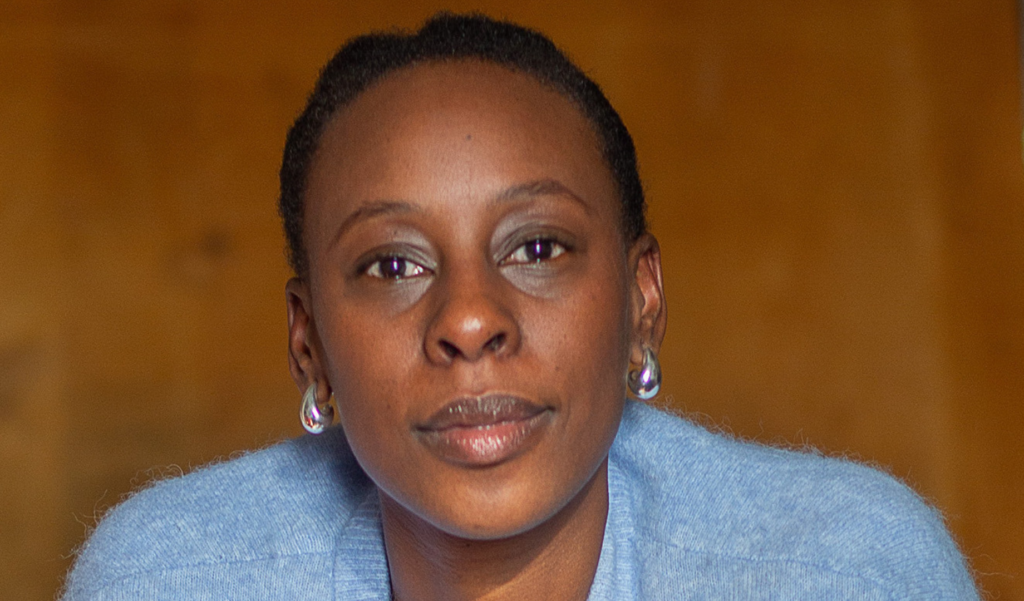
Chiedza Pasipanodya (b.1987, Harare, Zimbabwe) is a sculptor and writer whose practice investigates material culture, diasporic memory, and the transformative potential of ritual and form. Pasipanodya works through a post-minimalist lens, drawing from Afro-diasporic and speculative frameworks to explore how objects become vessels for lived histories, perceptual shifts, and cultural transmission. Their early life, shaped by migration and alternative spiritual traditions, cultivated a deep interest in the metaphysical and the unseen, informing a material practice attentive to the ways that time, matter, and meaning interrelate.
Notable exhibitions include Have No Doubt of the Omnipotence of a Free People at Catinca Tabacaru Gallery, Bucharest (RO), Matter of Return, National Gallery of Zimbabwe, Bulawayo (ZW), Dura | a mechanism for recalling sensibilities of community care (from any and all satellite sites such as this) at BAND Gallery & Fort York Historic Site, Toronto (CA), Genealogies of Sustenance at The Gardiner Museum, Toronto (CA), Ndafunga Dande (Thoughts of Home) at Art Gallery of Burlington, Burlington (CA), 10 at Zalucky Contemporary, Toronto (CA), and New Forms: that which constitutes critical matter at Artspeak, Vancouver (CA).
Pasipanodya is a recipient of the Cranbrook Museum Purchase Award (US), Maxwell/ Hanrahan Foundation Materials Fund from Cranbrook Academy of Art (US) and received Honorable Mention for Outstanding Student Achievement in Contemporary Sculpture from the International Sculpture Centre (US). They have participated in international residencies including Watershed Center for Ceramic Arts (US), Dzimbanhete Arts and Cultural Interactions (ZW), and the Global Experience Project: Maria Thereza Alves (IT). Pasipanodya holds an MFA in Sculpture from Cranbrook Academy of Art.
Photo by Sean Harrison.
-
Accessibility
Art Museum at the University of Toronto - University of Toronto Art Centre
Accessible entrance and washrooms
Accessible ramps / elevators
AODA compliant building
Accessible parkingUniversity of Toronto Art Centre (15 King’s College Circle) Accessible Entrance: There is a ramped entrance at the northwest corner of University College (near the Croft Chapter House).
-
Getting There
Art Museum at the University of Toronto - University of Toronto Art Centre
TTC: Museum Station; Queen’s Park Station; 506 Carlton streetcar; and the Route 5 bus
Bike Share: Willcocks St / St. George St and Wellesley St W / Queen’s Park Crescent
Donors & Supporters

Partners
